by
by 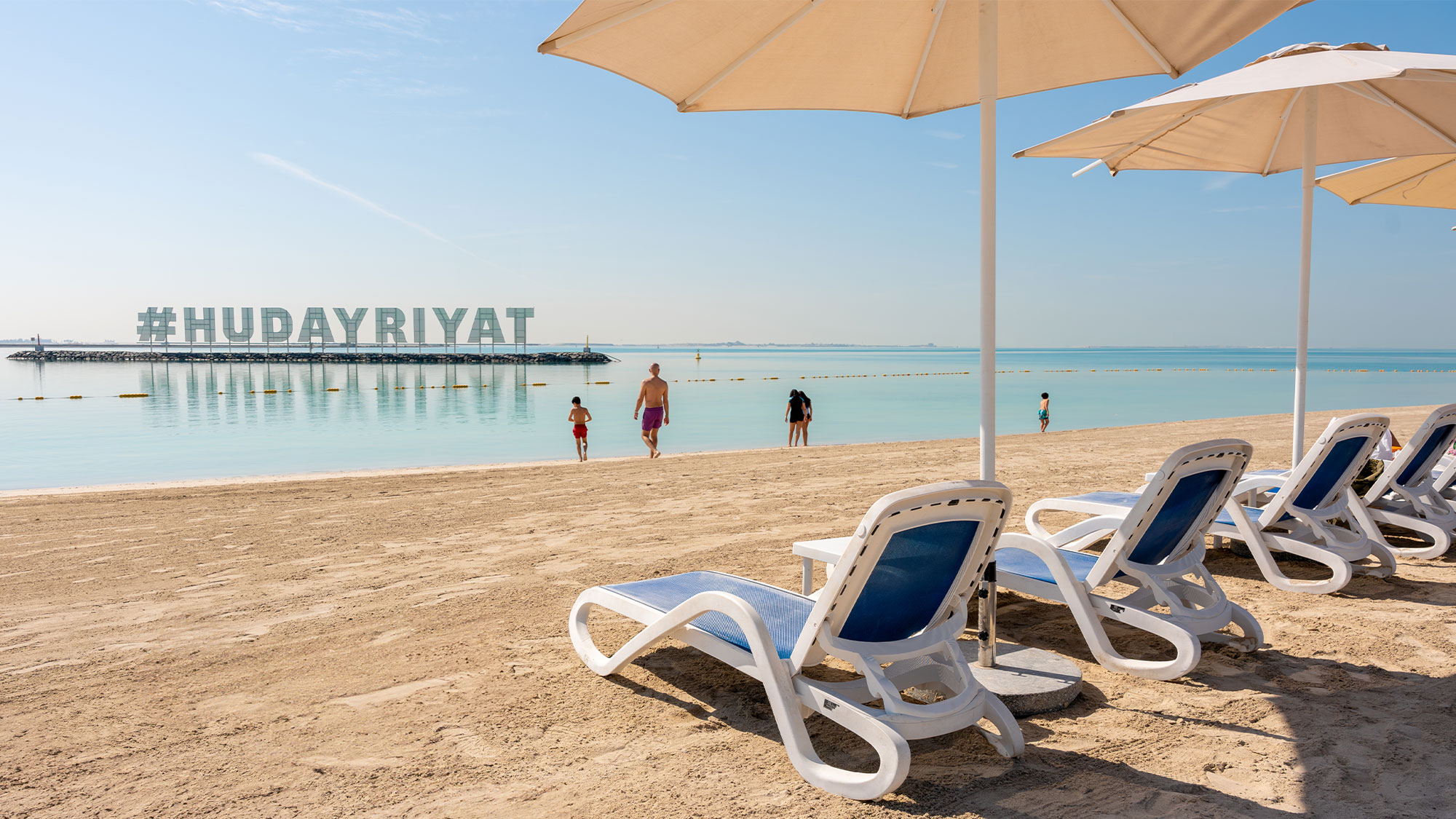
Drive west out of Abu Dhabi, past Al Bateen, and you will hit a long, elegant suspension bridge that seems to head straight out to sea. For years, people who grew up here had a wry name for it. They called it the road to nowhere. You would cross it, glance around at the sand and the open water, and quietly wonder who on earth had approved the budget.
Cross that same bridge today and the joke completely falls apart.
It now lands you on Hudayriyat Island, a 3,000-hectare stretch of coast that has turned into one of the most talked-about lifestyle destinations in the entire Gulf. And I do mean talked-about. Mention it at a dinner table in Abu Dhabi and someone will have surfed there, someone else will have nearly bought a villa there, and a third person will insist it is the best place in the city to watch the sun go down. They are all, in their own way, correct.
Here is what is actually going on out there, and why it has people so worked up.
First things first: where is this place?
Hudayriyat (you will also see it written Al Hudayriat) sits just off the southwestern coast, more or less facing Al Bateen Beach. The bridge across is an extension of Sheikh Shakhbout bin Sultan Street, and the whole crossing takes you from downtown to island in under twenty minutes. That is the part that surprises everyone. You expect somewhere this calm and this open to be a long pilgrimage. Instead it is closer to the Corniche than your second-favourite brunch spot.
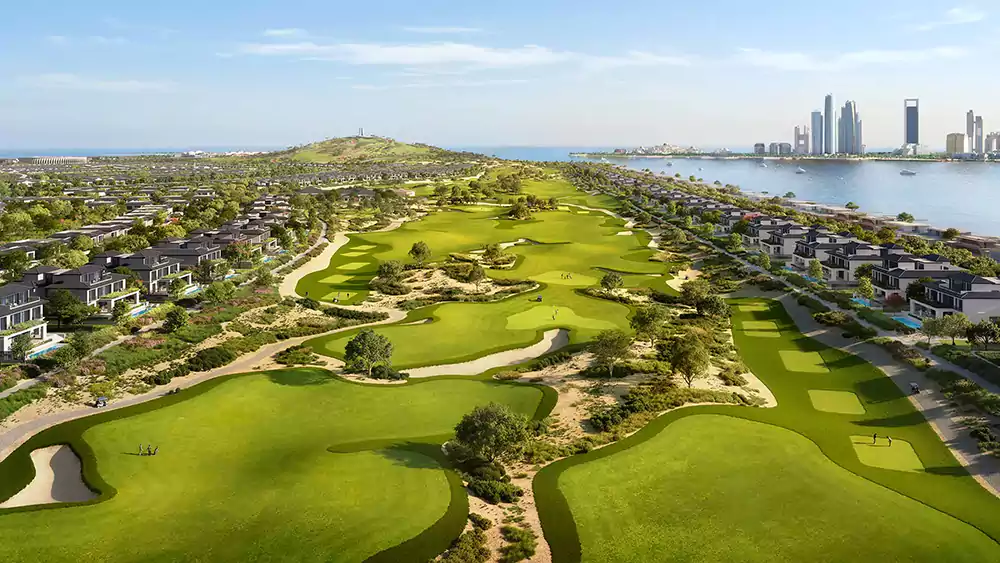
The scale takes a second to land. The master plan covers tens of millions of square metres and will eventually hand Abu Dhabi more than 53 kilometres of brand-new coastline, including around 16 kilometres of fresh beach. Roughly 60 percent of the island is being kept as parks, open green space, and calm blue lagoons. And here is the detail I love most: in a country famous for being flat as a table, the developers went ahead and built hills. Real, engineered ridges rising to somewhere between 45 and 60 metres, raised on purpose so homes could climb the slopes and look out over the water and the skyline without a single rooftop in the way.
This is not “another waterfront project.” It feels more like someone designed a small city specifically for people who hate sitting still.
The showstopper: yes, you can surf in the desert
Let us talk about the wave, because everybody wants to talk about the wave.
Surf Abu Dhabi is a Kelly Slater Wave Co. pool. That is a big deal in the surfing world, because it is only the second of its kind anywhere on the planet, after the legendary original in Lemoore, California. And this one currently holds the records for the longest artificial ride, the biggest barrel, and the largest man-made wave in existence. A perfect, machine-made wave peeling endlessly through the desert sounds like something a kid would draw. They built it anyway. For years it was so hush-hush that surf nerds were squinting at satellite images, trying to work out what the strange shape forming on the coastline could possibly be.
The cast at the opening was absurd. Kelly Slater himself, the most decorated surfer in history, paddled out to test the very first waves, with world champions like Stephanie Gilmore, Gabriel Medina, Filipe Toledo, and Caroline Marks along for the ride. The pool opened to the public in late 2024 and almost immediately hosted the first professional surf contest the UAE has ever seen. It has since been written into the World Surf League’s elite Championship Tour calendar. As the head of the Kelly Slater Wave Company put it, the whole point was to share the stoke of surfing with a part of the world that had never really had a shot at it.
It briefly went viral for the jaw-dropping price of one ultra-premium private session, which is fun gossip. But the part that matters is simpler: ordinary people can book a wave here, whether you have surfed for twenty years or have never stood on a board in your life, with beach clubs and a surf club right there for a long, salty lunch once you have wiped out enough times for one day.
A perfect, machine-made wave peeling endlessly through the desert sounds like something a kid would draw. They built it anyway.
The whole island basically runs on adrenaline
The wave gets the headlines, but Hudayriyat was dreamed up as Abu Dhabi’s sports island, and the rest of the line-up is genuinely ridiculous.
The Velodrome Abu Dhabi is the next big unveiling: the region’s first UCI Category 1 indoor cycling track, a 3,500-seat arena built for elite international racing. The showpiece is a rooftop track wrapped by a 600-metre ramp that spirals up the outside of the building, so riders climb into a full 360-degree view of the island and the skyline as they go. As of mid-2026 it is getting ready for a grand opening built around a major international track-cycling event later in the year, the kind of thing that cements Abu Dhabi’s reputation as a proper “Bike City.”
Cyclists, honestly, are spoiled rotten here. The island is laced with a 220-kilometre web of cycle tracks, plus Trail X, a 15-kilometre mountain-bike route with four difficulty levels, ranging from “lovely gentle roll” to “why did I agree to this.”
And then there is everything else:
- 321 Sports, an open-air fitness village with proper training programmes and full sports fields.
- Circuit X, with high-ropes courses, zip lines, and obstacle challenges dotted around the island.
- OCR Park, one of the largest permanent obstacle courses in the country, with separate tracks for adults and kids (check ahead before you go, since parts of it close now and then for upgrades).
- 23 courts built to international standards, covering beach football, full-size pitches, beach volleyball, basketball, and tennis.
There is even a new hotel built entirely around the active-life idea, Olympia Resort, a Modon Hospitality property with recovery-focused rooms, serious sleep-and-recovery tech, and the cycle network basically on its doorstep. It is the sort of place where the spa menu and the training plan get equal billing.
For the days you would rather do nothing at all
Not all of this is heart-rate monitors and lactic acid, thankfully. Hudayriyat has a slower, softer side, and it might be my favourite part.
Marsana is the island’s beachfront promenade, the kind of place lined with cafés, restaurants, little boutiques, open lawns, and art you can wander past. Come evening it turns into one of the prettiest sunset spots in the city, and once the boardwalk lights flicker on, the East Beach stretch leans into music-and-neon beach nights. The original Hudayriyat Beach, a calm 600-metre curve of sand, is still where families go when all they want is sunshine and shallow, friendly water.
If you want something even quieter, walk the Hudayriyat Heritage Trail. It is a roughly 1.4-kilometre boardwalk with 14 stops, and it gently tells the island’s older story: ancient shell middens, the UAE’s pearl-diving past, and little educational nodes devoted to the dugongs, sharks, and rays that drift through the Arabian Gulf. And for a night you will actually remember, Bab Al Nojoum runs beachside glamping under skies that are genuinely dark and thick with stars, which is a rare gift this close to a capital city.
Right, so what is it like to actually live there?
Everything above is the lifestyle sales pitch, and it is a good one. But the reason the property crowd is paying such close attention is that Modon wrapped homes around the entire thing, and those homes have been vanishing almost the moment they go on sale.
The two flagship neighbourhoods are Nawayef and Al Naseem, both built up on the island’s signature hills.
Nawayef comes in three flavours. Nawayef Homes are the (relatively) sensible villas, roughly 3,700 to 4,700 square feet. Nawayef Heights climb higher, with larger designs in the 8,700 to 17,000-plus square foot range. And Nawayef Mansions are the show-offs of the family: palatial 3-to-8-bedroom residences running from around 18,000 to nearly 29,000 square feet, sitting on landscaped plots with views over the marina, the island, and the Gulf.
Al Naseem, meanwhile, offers four-to-six-bedroom freehold villas in some genuinely distinctive styles, from clean Californian lines to softer Art Nouveau touches.
Modon did not stop there either. Newer launches like Bashayer (the island’s first waterfront community), along with Wadeem, Hudayriyat Golf Estates, and a handful of other Nawayef collections, have seen demand that borders on chaotic. Wadeem reportedly shifted more than 900 plots in about 72 hours. Bashayer, with its 157 villas and 330 apartments, a clubhouse, a rooftop infinity pool, and a 3.5-kilometre promenade, sold out in a single day and brought in something like 3 billion dirhams.
A few practical things worth knowing if you are tempted:
- The homes are freehold and open to all nationalities, which is a meaningful deal in Abu Dhabi.
- Spend 2 million dirhams or more and you can apply for the UAE’s 10-year Golden Visa.
- Modon is backed by the Abu Dhabi government, which tends to settle the nerves of anyone wary of buying off-plan.
A quick, honest word about the prices
If you have been clicking around listing sites, you have probably seen prices that contradict each other wildly. “From 2 million.” “From 7 million.” “20 million-plus for a Nawayef villa.” Here is the thing: they are all sort of right, because they are describing completely different products spread across a very large island, from apartments to mega-mansions. Handover dates and payment terms shift from one community to the next too, though a 10 percent booking deposit with a 40/60 split comes up a lot.
So the honest advice is this. Pin down the real numbers directly with Modon or a RERA-licensed agent before you act on any single figure, and keep in mind that a lot of the glossy “Hudayriyat” websites floating around are independent brokers rather than the developer itself. The official sources are modon.com and the destination’s own site, hudayriyatisland.ae.
So, is it worth all the noise?
Here is the honest verdict. What makes Hudayriyat special is not any one trophy feature. Abu Dhabi already has gorgeous coastline and no shortage of luxury villas. It is the combination that gets you: a master plan that bet on movement, nature, and community instead of just square footage and chandeliers. Where else can you reel off a list of neighbourhood amenities that includes a world-record wave pool, a UCI velodrome, a 220-kilometre cycle network, and the largest urban park in the region, and have every word of it be true?
The road to nowhere, it turns out, was simply early. These days it leads somewhere genuinely special, and the strangest part is that the island is still only partway through becoming whatever it is going to be.