MBRGI Backs UNICEF Measles Vaccination Program
Description
Measles remains one of the most dangerous yet preventable diseases for children, especially in regions affected by poverty, conflict, and weak healthcare systems. Despite the availability of effective vaccines, millions of children still miss routine immunization due to instability and lack of access to medical services.
To address this urgent issue, the MBRGI UNICEF measles vaccination programme has been announced, focusing on protecting children living in marginalized communities and crisis-affected areas. Through this initiative, the Mohammed bin Rashid Al Maktoum Global Initiatives (MBRGI) is working alongside UNICEF to deliver life-saving vaccines to those who need them most.
MBRGI and UNICEF Announce Measles Vaccination Partnership at World Economic Forum
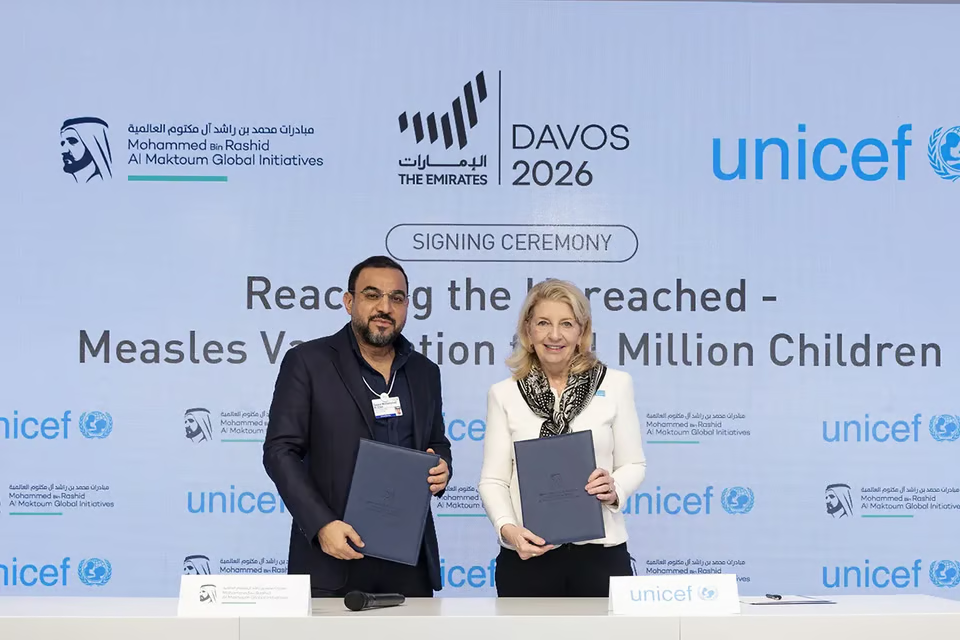
The partnership was officially announced during the World Economic Forum in Davos, Switzerland. During the event, MBRGI’s CEO, Saeed Al Eter, signed a Letter of Intent with UNICEF Executive Director Catherine Russell, marking a renewed commitment to global child health.
Under this collaboration, MBRGI supports UNICEF’s measles vaccination efforts to reach children who have been excluded from basic healthcare due to conflict, displacement, or extreme poverty.
Reaching Children in Marginalized and Conflict-Affected Areas
The UNICEF measles vaccination million children initiative focuses on children who have not received routine immunizations. These children often live in regions where healthcare systems are disrupted or overstretched, increasing the risk of measles outbreaks.
Rather than a short-term intervention, the programme follows a coordinated approach to routine immunization. This helps ensure both immediate protection and long-term health benefits by strengthening vaccination systems in vulnerable regions.
Shared Commitment to Preventable Disease Control
Saeed Al Eter described the collaboration as a critical step toward breaking cycles of disease and protecting the future of underprivileged children across multiple countries. He emphasized that strategic partnerships with international organizations are essential to reaching communities that struggle to meet basic healthcare needs.
Catherine Russell, UNICEF’s Executive Director, welcomed the support, stating that the additional contribution will help deliver measles vaccines to children affected by conflict. She reinforced that no child should die from a disease that is entirely preventable.
MBRGI’s Broader Humanitarian Role
The MBRGI UNICEF measles vaccination programme builds on MBRGI’s long-standing humanitarian mission. Since its launch in 2015, the organization has allocated more than AED 13.8 billion to humanitarian and development initiatives, reaching 788 million people across 118 countries.
In 2024 alone, MBRGI invested over AED 2.2 billion across five core pillars, including healthcare, education, humanitarian aid, innovation, and community empowerment. These efforts reflect a long-term approach to improving lives and supporting vulnerable populations worldwide.
Global Measles Impact and Why Vaccination Matters
Measles remains a serious global health threat despite being preventable. According to WHO and UNICEF:
- Over 100,000 children die each year from measles-related complications, mostly under the age of five.
- Nearly 20% of children globally miss at least one essential vaccine, leaving millions vulnerable to outbreaks.
- Conflict and crises worsen immunization coverage, as damaged healthcare systems, displaced families, and shortages of medical staff make vaccines hard to reach.
- Children in marginalized communities are most at risk, often missing routine vaccinations entirely.
- Vaccination programmes like the MBRGI UNICEF measles vaccination initiative help bridge this gap, delivering life-saving vaccines to children in need.
- Long-term impact: Besides immediate protection, coordinated vaccination programmes strengthen routine immunization systems and promote healthier futures for children.
Advancing Child Health Through Global Cooperation
Measles vaccination is one of the most effective tools for preventing child mortality, yet access remains unequal. By ensuring MBRGI supports UNICEF measles vaccination, this partnership helps bridge the healthcare gap for children living in the most challenging environments.
The collaboration highlights the importance of global cooperation in protecting children’s health and moving toward a future where preventable diseases no longer threaten young lives.
Frequently Asked Questions (FAQs)
Q1. What is the MBRGI UNICEF measles vaccination programme?
It is a joint initiative where MBRGI supports UNICEF’s efforts to vaccinate one million children against measles in marginalized communities and conflict-affected areas.
Q2. Why is measles vaccination a priority?
Measles is highly contagious and can be fatal, especially for children with limited access to healthcare. Vaccination is a safe and proven way to prevent the disease.
Q3. How many children will benefit from this initiative?
The programme aims to protect one million children through the UNICEF measles vaccination target.
Q4. Where will the vaccination efforts take place?
The programme focuses on underserved regions, including conflict zones and areas with low routine immunization coverage.
Q5. How does this partnership support long-term health?
In addition to immediate vaccination, the initiative strengthens routine immunization systems to support children’s survival and healthy development over time.
Q6. What role does MBRGI play in global humanitarian efforts?
MBRGI funds and supports initiatives across healthcare, education, and humanitarian aid, reaching hundreds of millions of people worldwide through sustained partnerships.