UAE Airlines expand to Over 420 Global Destinations as Ceasefire Eases Travel
Description
Three weeks ago, the UAE’s skies felt smaller than they had in decades.
Flights were grounded. Routes were suspended. Jet fuel prices had doubled. Travellers stared at cancellation emails wondering if Dubai was still, well, Dubai.
Then something quietly extraordinary happened.
In under a month, the UAE’s four biggest airlines, Emirates, Etihad, flydubai, and Air Arabia, went from flying to just 250 cities to connecting over 420 destinations worldwide. That is 170 new city links restored or added in roughly three weeks. For perspective, that is faster than most national carriers relaunch a single long haul route.
And while global headlines were busy debating ceasefires and oil prices, the UAE was already back in the sky.
Here is the full story, the full map, and every fact you need to understand why this might be one of the most impressive aviation comebacks in modern history.
The Numbers That Made the World Blink
Let us start with what actually happened.
At the start of April 2026, UAE airlines collectively served roughly 250 destinations through a mix of direct and connecting flights. By late April, that figure had ballooned to 420 cities across six continents.
This was not slow, cautious growth. This was a full throttle network reconstruction happening in real time.
A quick snapshot of where each airline stands now:
- Emirates is operating to around 125 of its usual 140 plus destinations, with roughly 15 routes still suspended. The airline is adding cities back weekly.
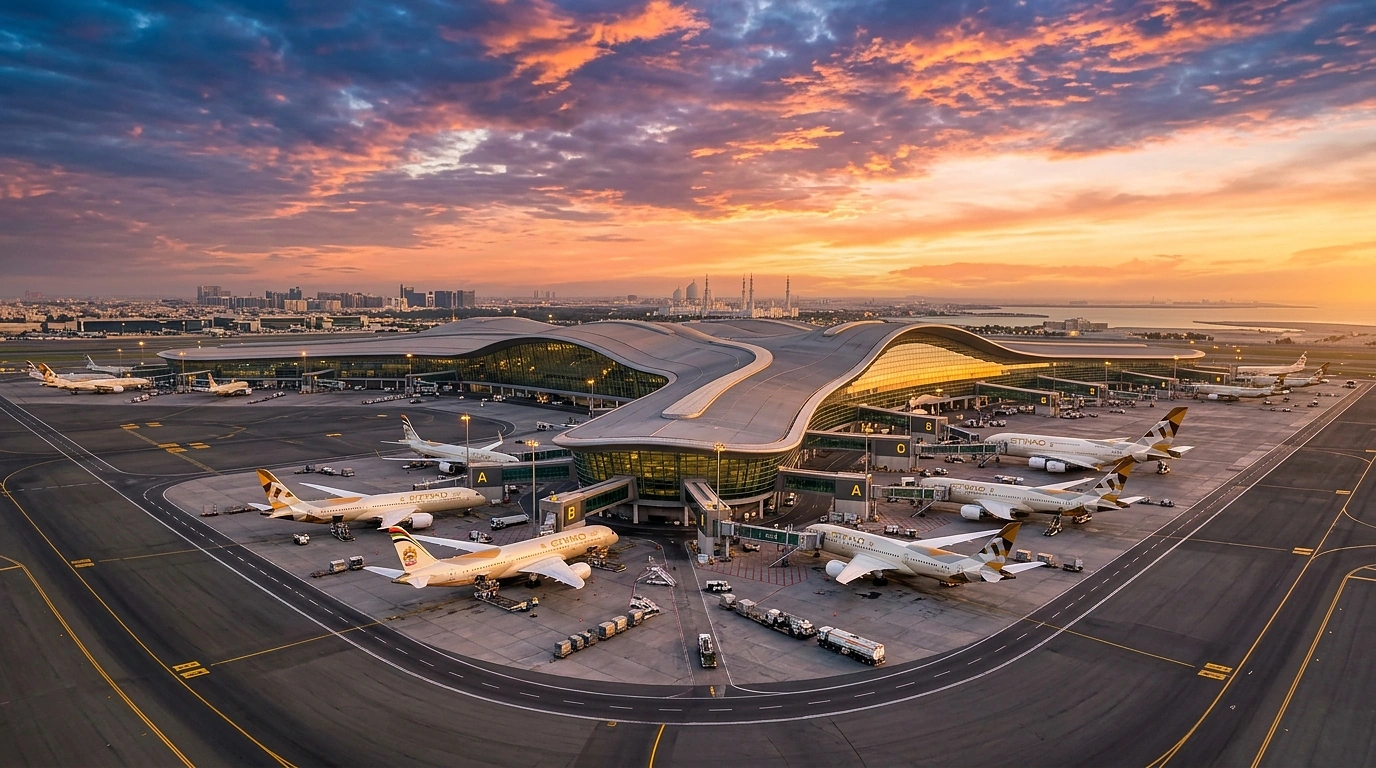
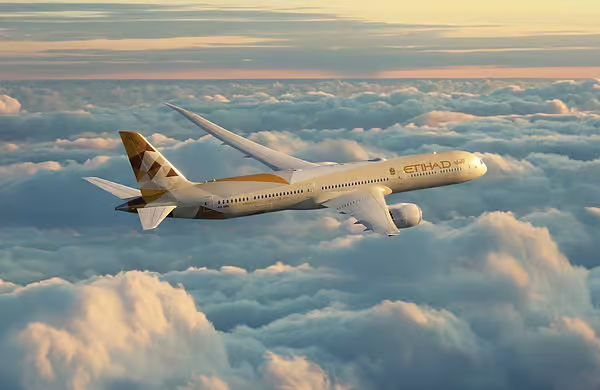
- Etihad Airways is flying to about 80 destinations from Abu Dhabi, running over 70 daily departures.
- flydubai has climbed back above 100 routes, operating at roughly 40 percent of pre crisis capacity but growing fast.
- Air Arabia is running a limited but expanding schedule from Sharjah, Abu Dhabi, and Ras Al Khaimah.
Add them all up, factor in connecting flights and codeshares, and you land on that remarkable 420 figure.
The Six African Cities That Changed Everything
Here is the twist most people missed.
While Emirates, flydubai, and Air Arabia focused on restoring routes, Etihad did something bolder. It used the ceasefire window to expand in ways no one expected.
The Abu Dhabi based carrier announced new flights to six African cities:
- Accra, Ghana
- Asmara, Eritrea
- Harare, Zimbabwe
- Kinshasa, Democratic Republic of Congo
- Lubumbashi, Democratic Republic of Congo
- Lagos, Nigeria
Why does this matter? Because Africa is where the next billion travellers are coming from. And Etihad just positioned Abu Dhabi as the bridge between African megacities, Indian tech hubs, and Chinese manufacturing centres. One hub. Three continents. Millions of new passenger possibilities.
This is not reactive flying. This is strategic empire building disguised as a recovery move.
The Destinations You Can Fly to Right Now
Here is a taste of the 420 cities currently reachable via UAE carriers. The spread alone tells the story of how central the UAE has become to global aviation.
Africa
Addis Ababa, Alexandria, Cairo, Nairobi, Lagos, Accra, Harare, Kinshasa, Lubumbashi, Asmara, Sohag.
South and Southeast Asia
Ahmedabad, Bangalore, Chennai, Coimbatore, Delhi, Goa, Hyderabad, Jaipur, Kochi, Kolkata, Kozhikode, Mumbai, Nagpur, Thiruvananthapuram, Chittagong, Dhaka, Kathmandu, Faisalabad, Islamabad, Karachi, Lahore, Multan, Peshawar, Quetta, Sialkot, Colombo, Bangkok.
Middle East
Abha, Al Jouf, Dammam, Gassim, Gizan, Hail, Jeddah, Riyadh, Tabuk, Amman, Bahrain, Beirut, Baghdad, Basra, Erbil, Damascus, Salalah.
Europe
Athens, Istanbul, Helsinki (brand new Emirates route), plus a growing list as European airspace restrictions ease.
North America
Calgary (a new first for UAE carriers), Charlotte, North Carolina via Etihad, and the major US gateways through Emirates.
Central Asia and the Caucasus (Etihad’s 2026 pipeline)
Baku, Yerevan, Tbilisi, Almaty, Tashkent, Bucharest.
That is one passport, one UAE airport, and more than 420 possible next stops.
Why This Comeback Is Different From Any Other
Here is what most aviation analysts are not saying out loud.
Airlines do not usually bounce back this fast. When COVID closed the skies in 2020, it took Gulf carriers over 18 months to reconnect similar networks. This time, UAE airlines did it in weeks.
Three reasons explain the speed.
First, the UAE was already ready. Dubai’s government approved a 1 billion AED economic support package on 30 March 2026, giving hotels, airlines, and hospitality operators real financial runway to keep flying and hosting. That is roughly 272 million US dollars in standby firepower, released before most competitors had even finalised their recovery plans.
Second, UAE carriers are exempt from the EASA advisory that still restricts many European airlines from flying through parts of Gulf airspace. While British Airways, Lufthansa Group, KLM, Air France, and others remain partially grounded on Gulf routes, Emirates and flydubai kept their wheels turning.
Third, Dubai capped foreign airlines at one flight per day at DXB and DWC airports through May 31, 2026. That decision, controversial as it was, effectively handed UAE carriers a home turf advantage during the rebuild. Emirates and flydubai became the default way to fly in and out of Dubai, period.
The Jet Fuel Plot Twist
Here is a fact that deserves its own spotlight.
When the conflict began in late February 2026, jet fuel prices more than doubled globally. Airlines everywhere were bleeding cash. Some carriers outside the Gulf responded by slashing routes. UAE airlines did the opposite. They absorbed the cost, kept flying, and waited for the Strait of Hormuz to reopen.
It was a calculated bet. And it paid off.
Once the ceasefire went into effect and the Strait began partial reopening, fuel costs started easing. Airfares are projected to follow. Travellers booking Dubai flights in May and June are expected to see meaningful price drops compared to March and April peaks.
If you were holding off on a trip, this might be the window.
What This Means for Travellers Right Now
Some practical truths worth knowing before you book.
For flexibility: Emirates, Etihad, flydubai, and Air Arabia are all offering free rebooking or full refunds on disrupted tickets. Etihad’s policy currently covers rebooking up to June 15, 2026. Emirates extends flexibility through May 31, 2026.
For connections: Transit times in Dubai may still be slightly longer than usual. flydubai has noted that some flight paths have been temporarily rerouted, adding minor detours.
For Europe: If you are flying to the UAE from London, Frankfurt, Paris, or Amsterdam, book Emirates or flydubai directly. European carriers remain subject to EASA restrictions that could extend past April 24, 2026, when the next review happens.
For new destinations: If you have ever wanted to visit Accra, Harare, Tbilisi, Helsinki, or Calgary, your window just opened. Fares on brand new routes often start lower than established ones as airlines build demand.
What This Means for Dubai’s Bigger Story
Here is the part that matters if you are a resident, investor, or business owner in the UAE.
Dubai welcomed 19.59 million international visitors in 2025, a record that made it the second most visited city on Earth. Tourism represents a massive share of Dubai’s economy, and real estate, hospitality, retail, and services all depend on the sky staying open.
The 420 destination milestone is not just an aviation stat. It is a signal. It says Dubai’s ecosystem is resilient, its carriers are agile, and its government is willing to move fast when it matters. For property investors, that translates directly into rental demand, short term letting yields, and long term capital appreciation. For businesses, it means the talent pipeline, the supply chain, and the customer flow stay intact.
A city that keeps flying keeps growing.
The Quiet Announcement That Says Everything
Amid all the drama, one small detail flew under most radars.
Etihad quietly confirmed that five new mainland China destinations, Shanghai Pudong, Chengdu, Hangzhou, Shenzhen, and Guangzhou, will launch from October 2026. Emirates is adding Helsinki as the first ever direct UAE to Finland link. flydubai launched a new daily service to Chattogram in Bangladesh right in the middle of the crisis, on April 1, 2026.
These are not the moves of an industry in retreat. These are the moves of an industry that decided the turbulence was temporary and the future was already booked.
The Bottom Line
The UAE just pulled off something quietly historic. In three weeks, it went from 250 destinations to 420. It protected its tourism economy with a billion dirham intervention. It out manoeuvred European competitors on its own turf. And it used a ceasefire not just to recover, but to grow.
If you are sitting anywhere in the world wondering whether the UAE story is still one worth watching, the answer is in the sky. Literally.
420 cities. Four airlines. One remarkable comeback.
And this, according to every signal being sent from Dubai and Abu Dhabi, is just the warm up.
Frequently Asked Questions
Q1. How many destinations do UAE airlines currently fly to?
As of April 2026, UAE airlines collectively serve over 420 destinations worldwide, up from 250 at the start of the month. This includes direct and connecting flights across Emirates, Etihad, flydubai, and Air Arabia.
Q2. Which airline has expanded the most during the ceasefire?
Etihad Airways has been the most aggressive in expansion, adding six new African cities and confirming five new mainland China routes for launch in October 2026.
Q3. Are Dubai flights fully normal again?
Not yet, but close. Emirates is operating to about 125 of its usual 140 plus destinations. Around 15 routes remain suspended, and foreign airlines are currently capped at one flight per day at Dubai airports through May 31, 2026.
Q4. Will airfares drop now that the ceasefire is in place?
Yes, prices are expected to ease as jet fuel costs decline and the Strait of Hormuz remains open. Travellers booking for May and June should see lower fares than those who booked during peak disruption in March and April.
Q5. Can I rebook my disrupted flight for free?
Yes. All four major UAE carriers are offering free rebooking or full refunds. Etihad covers rebooking up to June 15, 2026. Emirates extends flexibility through May 31, 2026. Check your specific airline’s policy page for details.
Q6. What new destinations have been added recently?
New additions and returning routes include Accra, Asmara, Harare, Kinshasa, Lubumbashi, Lagos, Helsinki, Calgary, Charlotte, Chattogram, Baku, Yerevan, Tbilisi, Almaty, Tashkent, and Bucharest.
Q7. Should I book on a European airline or a UAE airline right now?
For the next two months at minimum, book directly with Emirates or flydubai. European carriers like British Airways, Lufthansa, KLM, and Air France remain subject to EASA restrictions that could extend past April 24, 2026.
Q8. Is Dubai safe for tourists right now?
Yes. Dubai remains fully operational as a tourism destination. Airports, hotels, retail, and services are running normally. Most Western governments currently advise exercising caution rather than avoiding travel entirely.