by
by 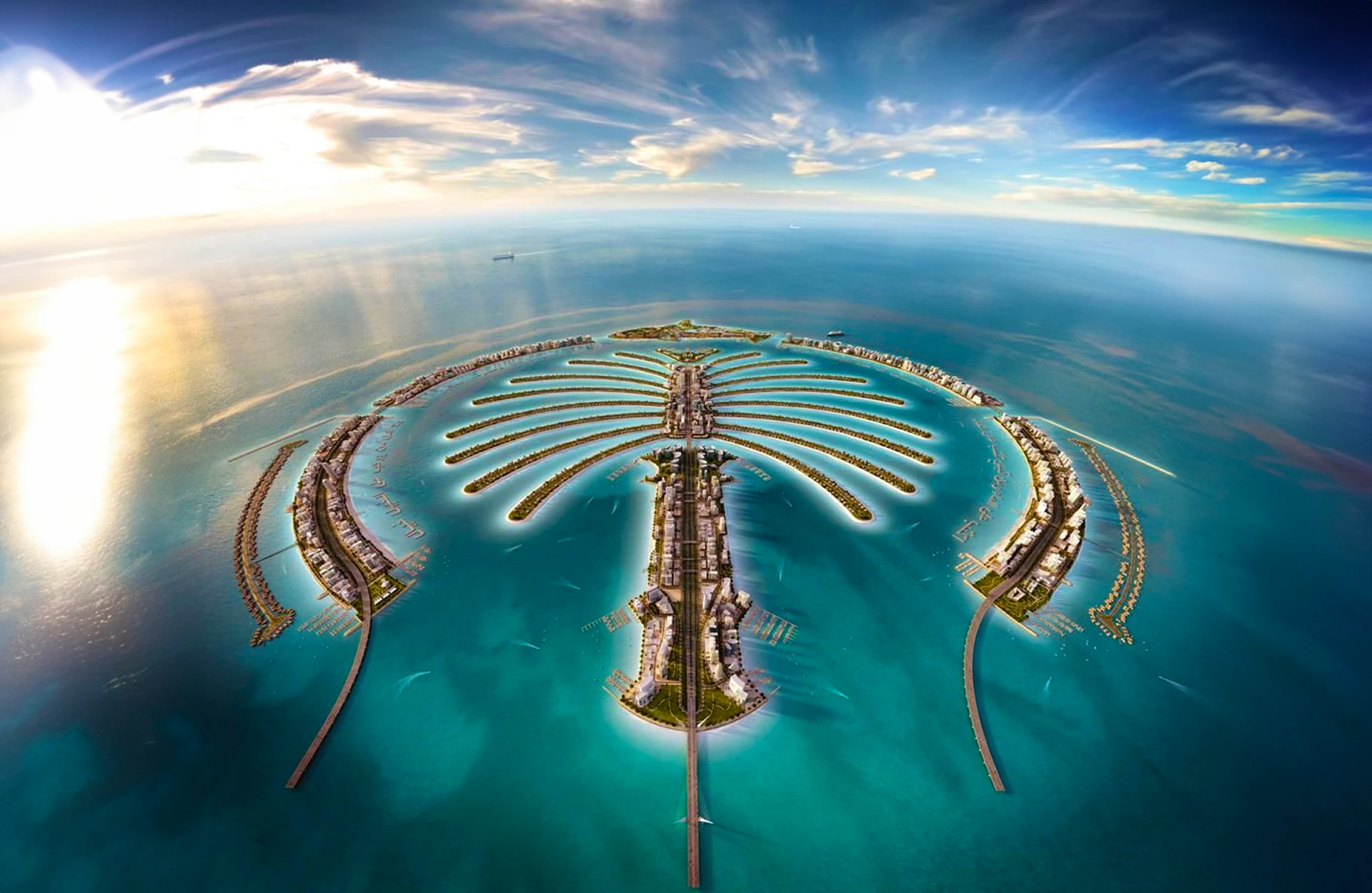
For fourteen years, the most expensive thing in Dubai was a shape in the sea.
You could see it from the window on the descent into DXB. A pale, half finished palm outline pressed into the Arabian Gulf southwest of Palm Jumeirah, holding perfectly still while the rest of the city built the tallest tower on earth, an indoor ski slope, a driverless metro and an entire second downtown around it. The sand had been dredged. The rock had been laid. Then in 2008 the money stopped, the barges left, and the island became Dubai’s most public unfinished sentence.
Developers avoided mentioning it. Estate agents used it as a cautionary tale. Satellite imagery hobbyists checked in on it every few years the way you might check on an old friend who had gone quiet.
That outline now has cranes on it, named contractors, published completion percentages, a regulator auditing the numbers, and buyers who have already wired seven figure deposits. In April 2026, Nakheel signed AED 3.5 billion in villa contracts. In June, the chief executive of Dubai Holding Real Estate told Gulf News the project had moved well beyond vision and into active delivery mode, with the first handovers scheduled before the end of this year.
Palm Jebel Ali is no longer a rumour. It is a construction site with a schedule. The question has changed from whether it will happen to whether you should be in it.
The island in one table
| Developer | Nakheel, part of Dubai Holding Real Estate (state backed) |
| Location | Jebel Ali coast, southwest Dubai, roughly 20 minutes from Dubai Marina |
| Size | 13.4 square kilometres, about twice Palm Jumeirah |
| Structure | Seven interconnected islands, 16 fronds, two crescents |
| New coastline | Around 110 km, including more than 90 km of beachfront |
| Capacity | Roughly 35,000 families and more than 80 hotels and resorts |
| Villa entry price | From about AED 18M on resale; Beach Collection from AED 25.2M |
| First handovers | Targeted late 2026, then phased through 2027 and 2028 |
| Ownership | Freehold, all nationalities, Golden Visa eligible |
Why this is not simply Palm Jumeirah again
The 2002 Palm Jebel Ali and the 2026 Palm Jebel Ali share a name and a stretch of coastline. Almost nothing else survived the redraw.
The most consequential change is invisible in the renders. In the original plan, the crescent breakwater carried villas. In the new masterplan it carries resorts and beach clubs, while the residential product sits on the fronds. That sounds like a zoning footnote. It is not. On Palm Jumeirah, the crescent accidentally became the most valuable hospitality real estate on the island, and everyone spent a decade retrofitting around that discovery. Here it was designed in from the first drawing.
The geometry is also far more generous. Fronds range from 200 to 630 metres wide and the trunk runs 730 metres across. Anyone who has stood on a Palm Jumeirah frond and been able to read the spines of a neighbour’s bookshelf will understand what that buys you. Larger plots, wider streets, real setback, and a chance that privacy survives contact with the buyers.
Sheikh Mohammed bin Rashid Al Maktoum approved the masterplan on 31 May 2023, folding it directly into the Dubai 2040 Urban Master Plan and its targets for expanded beach access and population growth. This is the part most buyers underweight. Palm Jebel Ali is not a standalone trophy development. It is the coastal anchor of Dubai’s entire southward expansion, sitting on the corridor that runs through Expo City and Al Maktoum International Airport, the stretch of the city absorbing the most public capital this decade.
Five districts, five different lives
The Trunk: the urban spine
The busiest address on the island. High rise apartments and penthouses positioned for framed sea views, sitting above fine dining, cafes, boutiques, private offices and cycling paths. The plans also place a luxury lifestyle mall, a central park, family beach clubs, a signature yacht club and a business park here, topped by an observation tower with 360 degree views.
The Fronds: the villa neighbourhoods
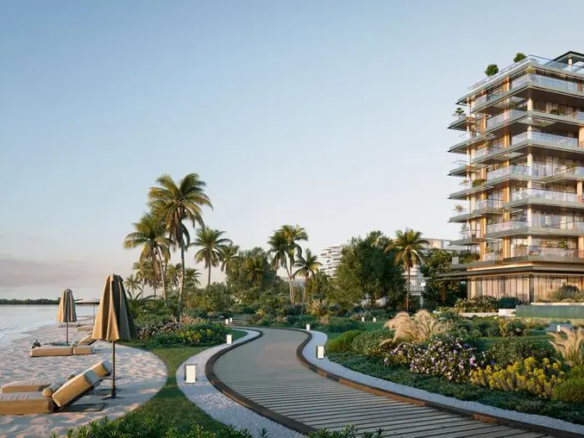
Sixteen gated ribbons of beachfront housing. Nakheel’s design brief leans on floor to ceiling glazing, neutral palettes, pocket parks, wide walkable streets and heavy shade planting, so that reaching the water on foot or by bicycle is the default rather than a summer act of courage.
The Crescents: leisure and hospitality
Landscaped promenades, beach clubs and outdoor recreation, deliberately held apart from the residential zones so tourism traffic never runs through the villa communities.
The Crown and Gateway
The head of the palm. Where Palm Jumeirah has Atlantis, this island is planned around a cluster of Gateway Towers and a celebration village.
Culture and community
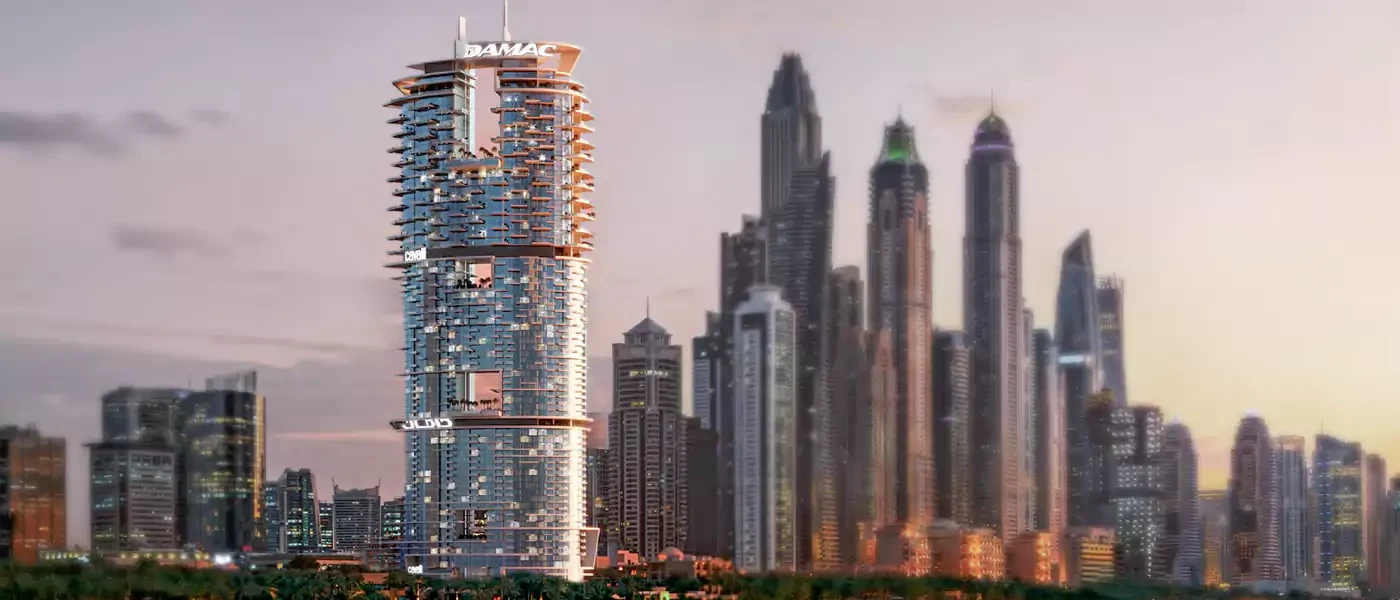
The masterplan is already producing landmarks that are not houses. Palm Central Private Residences is under construction, alongside the Palm Jebel Ali Friday Mosque designed by Skidmore, Owings and Merrill, intended as an architectural anchor for the island and the wider district.
Construction progress: the numbers, not the drone footage
This is where most coverage goes soft. Nakheel publishes actual completion percentages, and Dubai’s regulator publishes its own. They do not always agree, which is exactly why both are worth reading.
Nakheel internal inspection, 10 March 2026
| Frond | Reported progress |
| Frond K | 27.71% |
| Frond L | 24.71% |
| Frond M | 22.10% |
| Frond N | 29.20% |
| Frond O | 37.44% |
| Frond P | 20.50% |
The Real Estate Regulatory Agency inspected the same fronds on 27 January 2026 and recorded lower figures across most of them, including 25.11% for K, 19.73% for M, 24.20% for N, 31.45% for O and 15.60% for P. Different dates and different methodology explain part of that gap. The pattern is still worth filing away: developer reported progress runs a little ahead of the regulator’s. The blended headline figure Nakheel gives is 26.75%.
On the ground, superstructure works are advancing across all six fronds, villa outlines are now legible along the waterfront, and internal and external finishing has begun on selected units. That last detail matters more than any percentage. Finishing work is the stage where a project stops being reversible.
The contract layer
- 2024, AED 5 billion: awarded to Ginco General Contracting, Shapoorji Pallonji Mideast and UNEC for 723 Beach and Coral Collection villas across Fronds K to P, plus supporting infrastructure and public spaces.
- 27 April 2026, AED 3.5 billion: Ginco to build 354 villas across Fronds A to D, UNEC to deliver 190 villas across Fronds E and F, targeting completion in Q4 2028.
- Infrastructure: Nakheel expects island wide infrastructure works to finish in Q4 2026, following three contracts worth more than AED 750 million awarded to DBB Contracting.
- Access: DBB is also building the public access road from Sheikh Zayed Road to the island, the single line item that answers the oldest objection to this project, which is that it feels far away.
Handover: there is no opening day
Set aside the idea of a ribbon cutting. Dubai Holding Real Estate has been explicit that the island will not open on a single date. It will come to life in phases, sequenced across infrastructure, access, utilities, communities, public realm, hospitality and amenities, with the first residential phases and their supporting infrastructure taking priority. Ultra luxury villa deliveries are under way and handovers are scheduled to begin later this year.
| Milestone | Target |
| Island infrastructure works complete | Q4 2026 |
| First villa handovers, earliest Fronds K to P units | Late 2026, phased |
| Bulk Beach and Coral Collection handovers | 2027 to 2028 |
| Fronds A to F villa package, 544 villas | Q4 2028 |
| Hospitality, retail and full island buildout | 2029 onward into the 2030s |
Independent reporting has flagged that some fronds are tracking to late 2027 and that construction on certain fronds has not yet started. Treat every date above as a target attached to a specific contract package, never as a promise about the island as a whole. That distinction is the difference between an informed buyer and a disappointed one.
What it actually costs in 2026
Pricing splits sharply by collection, by frond position, and by whether you are buying from the developer or from someone who bought earlier and wants out.
The Beach Collection
Five and six bedroom beachfront villas from AED 25.2M. The design names give away the register the marketing is reaching for: Cyan Sky, Cobalt, Baia Luna, Ocean Whisper.
The Coral Collection
The ultra premium tier, and the more interesting product. Six and seven bedroom villas on the outer fronds designed by SAOTA and Naga Architects, with double height entrances, formal and family lounges, private studies, rooftop terraces and curated car galleries. Built up areas run from 11,519 to 12,010 square feet on plots of 16,745 to 21,944 square feet. Pricing starts at AED 42.6M, across types including Red Aurora, Porcelain Roses and Sunset Mirage.
Apartments and townhouses
From roughly AED 2.7M for a one bedroom at Palm Central Private Residences, with townhouses starting around AED 12.4M. This is a meaningful departure from Palm Jumeirah’s villa first launch, and it widens the buyer base considerably.
The resale market, where the entry point drops
Verified 2026 secondary pricing puts five bedroom villas from about AED 18M, six bedroom around AED 21.5M, and seven bedroom premium villas from roughly AED 29M to AED 43M. On a per square foot basis, Q1 2026 villa transactions clustered broadly between AED 2,500 and AED 2,800 depending on collection and position.
Payment structure
The Beach and Coral collections launched on an 80/20 plan. Palm Central Private Residences uses 70/30, with 20% on booking, 50% through construction and 30% on completion. Expression of interest amounts have been set at AED 500,000 for five and six bedroom villas and AED 1 million for larger units.
Every villa here clears the AED 2 million Golden Visa threshold several times over, which is a material part of why the buyer list is so international.
Palm Jebel Ali against Palm Jumeirah
| Palm Jumeirah | Palm Jebel Ali | |
| Status | Complete and mature | Under construction |
| Land area | About 5.6 sq km | 13.4 sq km |
| Frond width | Narrower | 200 to 630 metres |
| Coastline added | About 78 km | About 110 km |
| Crescent use | Mixed resorts and villas | Resorts and beach clubs |
| Price per sq ft | Substantially higher | AED 2,500 to 2,800 |
| Rental income | Available today | Not until handover |
| Liquidity | Deep and proven | Thin, off plan only |
The headline argument is the discount. Palm Jebel Ali product currently prices roughly 60% below comparable Palm Jumeirah stock per square foot.
The honest counterweight is this. Palm Jumeirah launched into a market with no comparable supply whatsoever, which is a large part of why its early buyers did so well. Palm Jebel Ali launches into a Dubai that already has luxury waterfront in volume. The assumption that pricing simply converges on Palm Jumeirah levels is a hope, not a mechanism.
Is it a good investment? The balanced version
The case for
- Sovereign backing. Nakheel sits inside Dubai Holding Real Estate. Whatever else this project carries, developer solvency risk is not high on the list.
- Scarcity that compounds. Dubai has a finite quantity of genuine beachfront and Nakheel controls a disproportionate share of it.
- Policy alignment. The project is explicitly tied to the Dubai 2040 Urban Master Plan and the D33 economic agenda. Government aligned projects in Dubai have a strong record of getting finished.
- Location logic. The island connects to Dubai’s growth corridor through Expo City and Al Maktoum International Airport, which is being rebuilt as the largest airport in the world.
- The early entry pattern. Off plan now accounts for 60% to 65% of all Dubai transactions, and early phase purchases have frequently delivered 20% to 40% capital growth across a project lifecycle, depending on location and developer quality.
The case for caution
- Timing risk is live. The project is selling into a 2026 market that recorded its first quarterly residential price decline since 2020 in Q1, driven by regional security conflict. A ceasefire and April rebound improved sentiment, but the outlook remains fluid.
- Cost inflation is real. Conflict driven construction cost inflation reported at around 30% across the Dubai market is genuine schedule pressure, and schedule pressure is how completion dates move.
- Zero yield until handover. Returns here come from capital appreciation and eventually short term rentals. Nothing arrives in the meantime.
- Progress is uneven. Fronds A to F have contracts but limited vertical work. Fronds K to P have measurable progress. This is a cluster based pipeline, not one continuous build.
- Exit before handover is harder than it used to be. Dubai has tightened off plan resale rules, so a quick flip is not a strategy you should assume is available.
Who this suits: buyers with a five to ten year horizon, no need for interim income, and the balance sheet to absorb a delayed handover without stress.
Who should wait: anyone needing rental income inside three years, anyone relying on rapid appreciation, and anyone who would be genuinely rattled if the 2028 valuation came in below the 2026 purchase price.
One middle path used by experienced buyers: take a single position now at primary pricing, then add later once construction and infrastructure are visibly delivered. You give up some upside and buy a great deal of certainty.
The buyer checklist nobody hands you
- Verify the escrow account. Every off plan payment in Dubai must land in a RERA registered project escrow. Check the account number against the Dubai Land Department project record before a single dirham moves.
- Read progress on Nakheel’s official page rather than on social media, then compare it against the RERA figure for the same frond. The gap tells you something.
- Read the sale and purchase agreement specifically for completion date remedies. Ask what happens at 12, 24 and 36 months of delay, and get the answer in writing.
- Budget the full cost. The 4% Dubai Land Department transfer fee, registration, agency commission and, critically, ongoing service charges on a beachfront villa, which are substantial and permanent.
- Choose the frond before the collection. Outer frond, west facing plots with sunset orientation carry a persistent premium on every palm island Dubai has ever built. It is the most durable value variable available to you.
- Use a RERA licensed broker and verify the licence number yourself on the Dubai REST app. It takes ninety seconds.
Questions buyers actually ask
When will Palm Jebel Ali be completed?
There is no single completion date. Infrastructure targets Q4 2026, first villa handovers begin phasing from late 2026, the Fronds A to F package targets Q4 2028, and full buildout including hotels and retail extends into the 2030s.
How much is a villa on Palm Jebel Ali?
Beach Collection villas start around AED 25.2M and Coral Collection from AED 42.6M on the primary market. Resale listings on earlier fronds start closer to AED 18M. Apartments at Palm Central start from roughly AED 2.7M.
How big is it compared to Palm Jumeirah?
13.4 square kilometres, roughly twice the size, with seven interconnected islands, 16 fronds and around 110 km of new coastline.
Can foreigners buy here?
Yes. The entire development is freehold and open to all nationalities. Purchases above AED 2 million qualify the buyer for a ten year Golden Visa.
Is it genuinely being built this time?
Yes. As of March 2026 Nakheel reported roughly 26.75% overall progress across Fronds K to P, with superstructure and finishing works under way, AED 8.5 billion in villa contracts awarded across two waves, and named contractors on site.
The bottom line
Palm Jebel Ali spent longer as an idea than most Dubai projects take to build, sell and resell twice over. That history is the source of both the opportunity and the caution, and you cannot take one without the other.
The opportunity is that you are being offered beachfront on a state backed island at roughly 40% of the per square foot cost of the island next door, in a city whose entire twenty year plan points south toward this exact coastline.
The caution is that between today and the moment that discount closes sits a multi year construction schedule in a market which has just reminded everyone, quite firmly, that it can move in both directions.
The shape in the sea has cranes on it now. Whether that reads as a green light or a starting gun depends almost entirely on how long you can afford to wait.