by
by 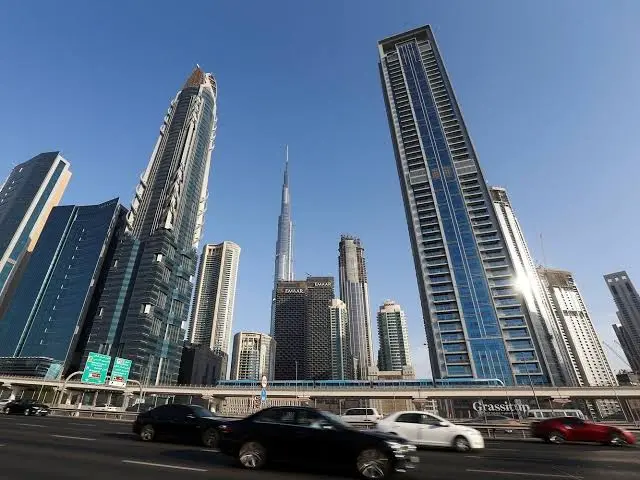
There is a particular kind of address in Dubai that money cannot manufacture. It can only be bought from someone who already has it. On Sheikh Zayed Road, that address just changed hands. AHS Properties, the ultra-luxury developer led by 26-year-old Abbas Sajwani, has acquired the Shangri-La Dubai hotel for Dh1.1 billion (roughly $300 million), in one of the largest single-asset property deals the emirate has seen in years. In the same breath, the company confirmed it will launch a Dh25 billion project later this year.
Those are headline numbers. But the more interesting story is why a young developer with a growing skyline of his own would spend Dh1.1 billion on a 23-year-old tower he might not even redesign, and then commit to a Dh25 billion development on top. The answer says a lot about where Dubai’s real estate market is heading.
Why AHS Properties Bought the Shangri-La Hotel in Dubai
Sajwani has been unusually candid about the logic. He did not buy a hotel, in his framing. He bought a position. The Shangri-La sits on a stretch of Sheikh Zayed Road where new land simply is not released anymore, and where global demand keeps arriving from every direction at once. As he put it, this is not a deal anyone will be able to do twice.
That scarcity argument is the whole thesis. The first five-star hotels went up on this corridor more than twenty years ago, on plots that were built once and never replaced. When you own one of them, you are not competing on price with the next tower over, because there is no next tower over. Sajwani has described the location as second to none: dead centre of the city, with uninterrupted views of Burj Khalifa on one side and the Arabian Gulf on the other. It is hard to overstate how rare that combination is, even in a city that manufactures spectacle for a living.
The deal was funded, he says, through a mix of debt and equity, sitting on a balance sheet strengthened by more than $2.5 billion in property sales over the first five years of AHS.
What You Get for Dh1.1 Billion on Sheikh Zayed Road
The Shangri-La is not a boutique bolt-hole. Completed in 2003, it is a 43-floor tower rising roughly 200 metres, one of the earliest luxury hotels to define the Sheikh Zayed Road skyline. The asset spans nearly 93,000 square metres and is genuinely mixed-use, combining a hotel, offices, residential units and a clutch of food and beverage venues in one landmark.
For a sense of how far prime Dubai has run, the same property changed hands for around Dh700 million back in 2020, in an auction tied to debt-recovery proceedings. Six years later it commands Dh1.1 billion, an increase of roughly 57 per cent on a single trophy building. That is not froth. That is what structural scarcity does to a fixed supply of irreplaceable addresses.
The seller was Mismak Asset Management, a unit of First Abu Dhabi Bank. And crucially for anyone with a booking or a lease, nothing changes on the ground. The Shangri-La brand continues to operate the hotel, and management has said it is business as usual for guests, staff and partners.
Meet Abbas Sajwani: Dubai’s Youngest Billionaire Developer
Here is where the story gets human. Abbas Sajwani is the son of Hussain Sajwani, the DAMAC founder often nicknamed the “Donald of Dubai.” Growing up inside one of the great property dynasties of the Gulf gave Abbas a front-row seat. But the interesting part is what he did with it, which was to walk in a slightly different direction.
He started early and a little unconventionally. Before real estate, he ran an internet cafe and a car wash, and made an early windfall trading stocks as a teenager. He founded the AHS Group at 18 and launched AHS Properties in 2021, beginning modestly by buying and reimagining ultra-luxury villas in Emirates Hills and on Palm Jumeirah. From there he moved to off-plan waterfront towers along the Dubai Water Canal, including One Canal, One Crescent and Casa Canal, and then into Grade-A offices with AHS Tower on Sheikh Zayed Road.
Today he is frequently described as the youngest billionaire in global real estate, having built a multi-billion-dollar company in under five years. He collects rare watches and hypercars, owns superyachts, and has recently been linked to a headline-grabbing London mansion purchase. But strip away the lifestyle and there is a consistent operating philosophy. He compares developing to haute horlogerie, where each project should stand alone as an object yet belong to one recognisable identity. His own line for it is memorable: the company never chased volume, it chased clarity.
The Sheikh Zayed Road Corridor Strategy
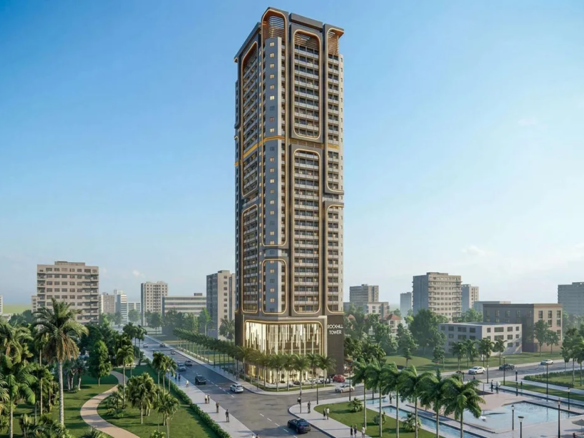
The Shangri-La is the second Sheikh Zayed Road tower AHS has picked up, following a $120 million buy of the long-vacant “Big Ben” tower, since relaunched as AHS Tower and sold out during development for more than $700 million. Add the flagship AHS City master-plan, with a forecast gross development value around Dh25 billion, and a pattern emerges.
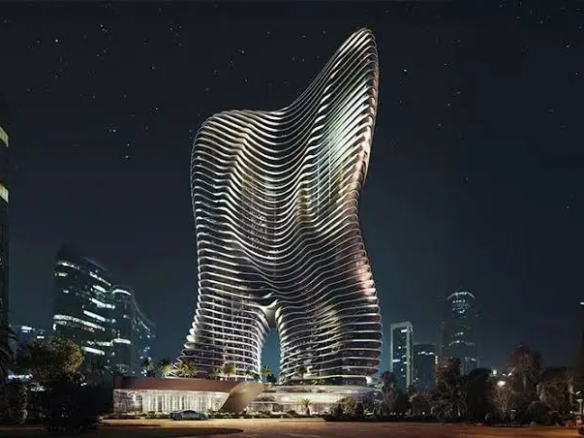
AHS describes the three assets, namely AHS Tower, AHS City and now the Shangri-La, as a single “vertical corridor play.” Rather than scattering bets across the city, Sajwani is concentrating capital on one strip of real estate where supply is structurally constrained and demand is globally diversified. Together these holdings represent a meaningful chunk of the targeted Dh50 billion pipeline of the company by the end of 2026.
The New Dh25 Billion Dubai Water Canal Project
The acquisition is not a standalone flex. AHS plans to launch a Dh25 billion mixed-use development later this year, comprising offices, homes and a hotel, on what Sajwani calls one of the biggest plots on Sheikh Zayed Road along the Dubai Water Canal. He is staying tight-lipped on specifics, but the ambition is clear. With this launch, the portfolio of the company is set to roughly double to Dh50 billion.
There is an Abu Dhabi chapter coming too. AHS has signalled it wants to expand into the capital and is “looking for the right opportunity,” landing at a moment when the emirate is drawing serious new money, from the Dh40 billion Al Bahia project by Sobha Realty to the Dh30 billion “mini city” by Naguib Sawiris between the two cities.
Is the Dubai Property Market Still a Good Investment in 2026?
This is the question underneath the whole deal, so let us look at the numbers honestly, the strong ones and the softer ones.
On the strong side, Dubai recorded Dh252 billion in real estate transactions in the first quarter of 2026, a 31 per cent jump year on year, with foreign investment up 26 per cent to over Dh148 billion and the investor base swelling past 48,000. That follows a 2025 in which transactions topped Dh917 billion. Demand is arriving from Europe, India, Russia and the Far East, and Sajwani points to selling a $30 million apartment roughly a month before the deal as proof the top end is still moving.
On the softer side, and worth taking seriously, April brought the second consecutive monthly dip in valuations for Dubai, with villa values down about 1.7 per cent and apartments off 2.2 per cent for the month, according to ValuStrat. Brokers describe a “wait-and-watch” mood among ultra-high-net-worth buyers on homes above Dh20 million, and Sajwani himself acknowledges a natural slowdown tied to regional geopolitical tension. His read is that buyers are pausing, not leaving, waiting for clarity rather than heading for the exit.
The nuance matters. A cooling in monthly valuations and a record quarter of transactions can be true at the same time. One measures price momentum, the other measures conviction and volume. For a buyer with a decade-long horizon, paying a premium for an un-repeatable address in a temporary lull is a defensible bet. For a short-term flipper, it is a very different calculation. As always, this is not investment advice. The right answer depends entirely on your timeline, your risk tolerance and your reasons for being in the market.
What Dubai’s New Golden Visa and Property Rules Mean for Buyers
Part of what keeps global capital flowing is that Dubai keeps sweetening the residency math. The government has updated its property-linked visa rules, scrapping the old Dh750,000 minimum for a two-year residence visa for single owners. For joint ownership, the threshold has been cut to Dh400,000 per investor. Layer that on top of the expanded 10-year golden visa and permits for retirees and remote workers, and you have a policy environment deliberately engineered to convert property buyers into long-term residents.
For overseas investors weighing a Dubai purchase, this is arguably as significant as any price chart. A home here can increasingly come bundled with a life here, and that optionality is a big reason the demand Sajwani is betting on keeps showing up.
The Bottom Line
The Shangri-La deal, paired with the Dh25 billion project to come, works as a neat summary of the current property moment in Dubai. There are genuinely irreplaceable assets, a young and unusually confident buyer, eye-watering headline transaction figures, and, just beneath the surface, a market catching its breath after years of running hard. The wager of Sajwani is essentially a wager on Dubai itself: that a city with 200-plus nationalities, a liberal visa regime and a skyline it keeps reinventing simply cannot be replicated anywhere else.
Whether Dh1.1 billion looks like a masterstroke or a top-of-the-cycle premium is a question only the next decade answers. But on a corridor where the land is spoken for and the views are finite, betting on scarcity has rarely been the losing move.