by
by 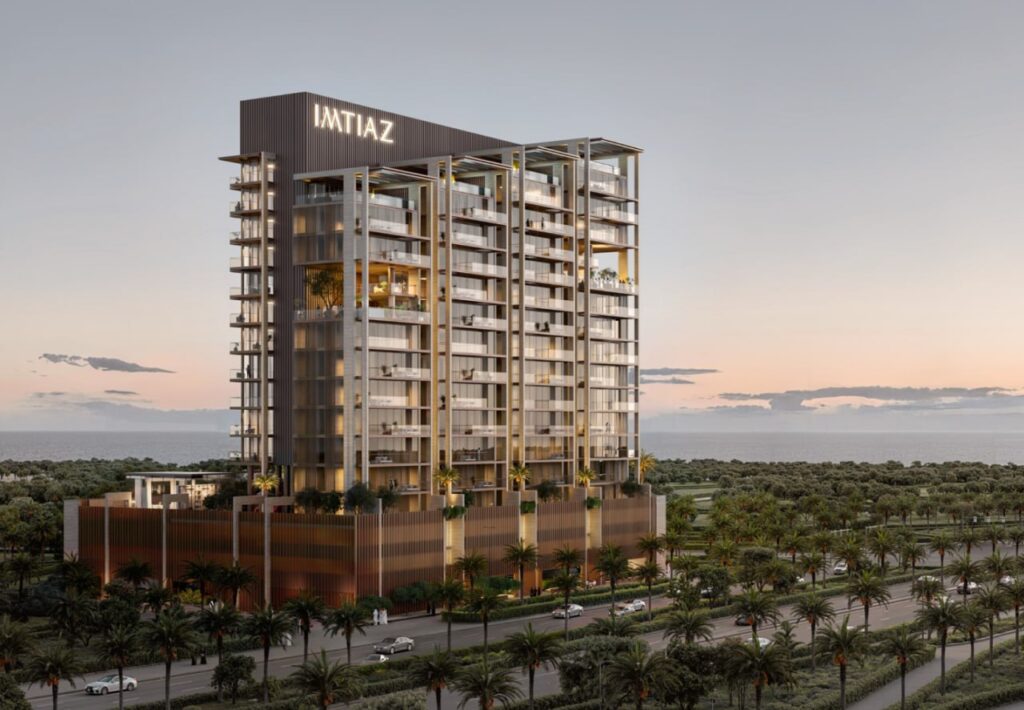
There is a particular moment in the life of every great waterfront district: the moment before the world catches on. Monaco had it in the 1950s. Miami’s Brickell had it in the early 2000s. Palm Jumeirah had it two decades ago, when skeptics still called it a mirage. In 2026, that moment belongs to Dubai Islands.
And this June, one of the district’s earliest believers doubled down. Imtiaz Developments, the Dubai-based developer with a portfolio now exceeding Dh15 billion and more than 22 projects on the archipelago, broke ground on Sea Cliff Residence, a Dh600 million waterfront development scheduled for handover in the first quarter of 2028. The ceremony, attended by CEO Masih Imtiaz and the company’s executive leadership, was brief. The statement it made was not.
First, a Sense of Place
If you have not been following Dubai’s northern coastline, here is what you have missed. Dubai Islands is a master-planned archipelago of five interconnected islands off the coast of Deira, spanning roughly 17 square kilometres and developed under the stewardship of Nakheel, the same master developer behind Palm Jumeirah. The vision, aligned with the Dubai 2040 Urban Master Plan, is ambitious even by Dubai standards: around 20 kilometres of new beachfront, capacity for more than 80 hotels and resorts, marinas, cultural quarters, and public promenades stitched together by new bridges connecting the islands to the historic heart of the city.
What makes this district different from Dubai’s established waterfront icons is its DNA. Palm Jumeirah was conceived as a trophy address. Dubai Marina grew into a vertical city. Dubai Islands, by contrast, is being built as a complete coastal ecosystem: residential, hospitality, retail, and leisure woven into a single, walkable, sea-facing fabric. It is less about a single postcard skyline and more about how people will actually live by the water for the next fifty years.
The market has noticed. Dubai Land Department data shows the district recorded more than 2,000 property transactions in the second half of 2025 alone, a jump of over 100 per cent year on year, representing roughly AED 5.6 billion in deal value. Analysts now project pricing in the district to approach AED 3,000 per square foot by the end of 2026 as infrastructure milestones are delivered. What was a watch-list curiosity three years ago has become one of the most closely tracked emerging waterfront markets anywhere in the Gulf.
The Developer Who Arrived Before the Crowd
Every emerging district has its pioneers, and on Dubai Islands, Imtiaz Developments has a legitimate claim to the title. The company entered the market before it was fashionable, and its conviction has since been vindicated in concrete terms.
In the second quarter of 2026, Beach Walk by Imtiaz became the first residential project ever completed and handed over on Dubai Islands, a genuine milestone for the entire master development, not just one company. In a district where dozens of developers are now racing to deliver, being first to hand over keys is the kind of credential that no marketing budget can buy. It reframes every subsequent launch: this is a developer that finishes what it starts.
Then there is the demand story. When Imtiaz launched RAW District, the project sold out on launch day, a Dh2 billion sell-out that stands as one of the more striking demonstrations of investor confidence in the district’s trajectory. Momentum like that does not happen in a vacuum; it happens when buyers believe both in the destination and in the developer’s ability to deliver.
As Masih Imtiaz put it at the groundbreaking, the company’s strategy has always been to identify destinations with long-term potential before they become mainstream, and to invest with conviction rather than follow the crowd. Sea Cliff is the latest expression of that philosophy.
Inside Sea Cliff: Coastal Living, Considered
So what exactly is rising from the ground?
Sea Cliff Residence is a premium waterfront community offering a curated mix of one-, two- and three-bedroom apartments alongside a limited collection of four-bedroom duplex homes: the kind of layout diversity that serves everyone from young professionals seeking a lock-and-leave sea-view base to families planting long-term roots.
But the detail that will catch the eye of anyone watching global luxury trends is the interior programme. Sea Cliff’s interiors are curated in partnership with Hermes, Villeroy & Boch, and Miele, three names that between them span two centuries of French leather craftsmanship, German porcelain artistry, and precision home engineering. This is not incidental. It places Sea Cliff squarely within one of the defining movements in worldwide real estate right now.
The amenity suite follows the same wellness-first logic reshaping high-end residential design from Phuket to Palm Beach: an infinity pool, an outdoor cinema, a pavilion clubhouse, open-to-sky garden seating, an outdoor gym, and a dedicated yoga zone. The emphasis is unmistakably on open air, community, and restoration; luxury measured in quality of life rather than square footage alone.
The Global Context: Why Brand-Curated Homes Are Eating the Luxury Market
Zoom out from Dubai for a moment, and Sea Cliff starts to look like a local expression of a worldwide phenomenon.
The branded and brand-curated residence sector has become one of the fastest-growing categories in global real estate. According to analysis of the Savills Branded Residences Report, active projects worldwide climbed from 764 at the end of 2024 to roughly 910 by the end of 2025, annual growth of nearly 19 per cent, with more than 830 further projects contracted through 2032. The sector has almost tripled since 2015, and total branded units globally have grown from around 27,000 to more than 162,000 in a decade.
Three forces are driving it:
The premium is real, and durable. Savills calculates that branded and brand-affiliated residences command an average global price premium of around 33 per cent over comparable non-branded stock, a figure that has held remarkably steady across markets and cycles. In scarce, high-demand corridors, that premium can run considerably higher. For international buyers, a recognised name functions as a de-risking mechanism: a guarantee of design standards, materials, and long-term value.
Fashion and design houses have entered the arena. Where hotel operators like Four Seasons and Ritz-Carlton once dominated, the new wave is led by design identities such as Armani, Fendi, Missoni, Elie Saab, and Pininfarina, translating brand language directly into living spaces. From Nobu’s residential tower rising in Manchester to Missoni’s debut on Portugal’s coast and Ritz-Carlton’s expansion across Florida, the pattern is global. Sea Cliff’s Hermes, Villeroy & Boch, and Miele curation reads as a sophisticated, materials-led take on the same idea: the brand lives in the details you touch every day.
Wellness has become the new luxury currency. Across every major report on 2026 luxury housing, the same theme recurs: buyers increasingly define luxury as wellbeing. Homes are being designed as regenerative environments built around air, light, water, movement, and community. Sea Cliff’s open-sky gardens, yoga zones, and outdoor cinema are not amenities bolted onto a building; they are the point.
And where is this movement’s global capital? Increasingly, it is Dubai. Industry observers consistently rank the emirate among the world’s leading cities for branded and design-led residences, powered by freehold ownership for international buyers, zero property tax, accessible residency pathways, and a coastline where demand persistently outruns supply.
The Investment Lens: Reading the District Honestly
A high-end blog owes its readers candour as much as enthusiasm, so here is the balanced view.
The bull case for Dubai Islands rests on solid ground: an early-stage pricing advantage relative to Palm Jumeirah or Dubai Marina, government-backed infrastructure investment (including a new eight-lane bridge to the mainland), surging tourism, and the historic pattern in comparable Dubai waterfront districts of 20 to 35 per cent capital appreciation between off-plan purchase and completion. Waterfront land in Dubai is finite; new beachfront inventory is genuinely rare.
The considerations are equally real. The district is still under construction, with full build-out not expected before 2030 and some components stretching toward 2037. In any emerging master development, delivery track record is the single most important variable a buyer can underwrite, which is precisely why Beach Walk’s completed handover matters so much to the Sea Cliff story. Buyers should always weigh service charges, handover timelines, and exit liquidity, ideally with independent advice.
Within that framework, Sea Cliff occupies an unusually well-supported position: a proven deliverer, a defined Q1 2028 handover, and a district whose fundamentals are strengthening quarter by quarter.
The Long View
Great waterfront addresses are never really about buildings. They are about timing, conviction, and the compounding value of getting there first. Monaco’s harbour, Miami’s shoreline, and the Palm all rewarded the people who saw the destination before the world did.
Dubai Islands is writing that chapter now, and with Sea Cliff Residence, Imtiaz Developments has once again positioned itself at the front of the story it helped begin. A Dh600 million groundbreaking is, in the end, a bet: that the future of luxury living is coastal, crafted, wellness-led, and built by developers who deliver.