by
by 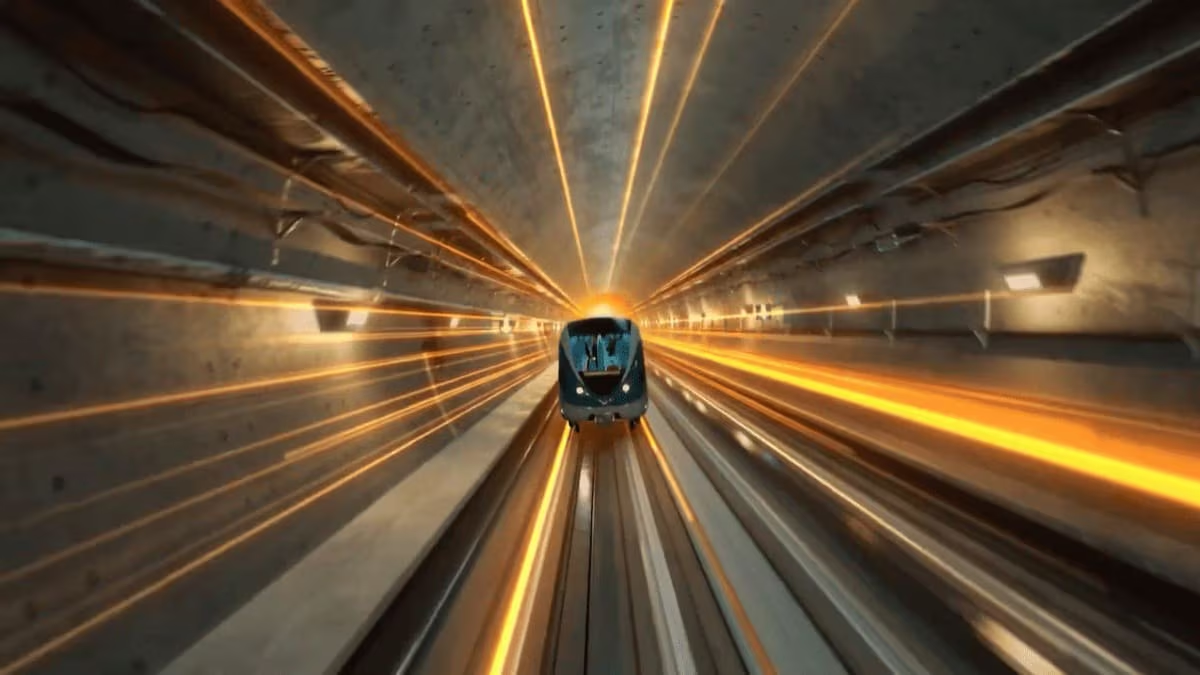
On April 22, 2026, His Highness Sheikh Mohammed bin Rashid Al Maktoum, Vice President and Prime Minister of the UAE and Ruler of Dubai, approved the largest public transport investment in the emirate’s history. The Dubai Metro Gold Line is a 42-kilometre, fully underground metro corridor that will reshape mobility for 1.5 million residents across 15 of the city’s most strategically important communities.
Dubai Metro Gold Line: Key Facts and Project Overview
The Gold Line is the centrepiece of Dubai’s Rail Network Plan 2032. Below are the headline figures that define the scale of this infrastructure undertaking.
| 42 km TOTAL LENGTH | 18 NEW STATIONS | AED 34B INVESTMENT | Sep 2032 OPENING DATE |
The Gold Line will increase the total length of the Dubai Metro network from 120 kilometres to 162 kilometres, a 35% expansion, and raise the total station count from 67 to 85. Its tunnel network will be twice the combined length of all existing Dubai Metro tunnels, built using the most advanced tunnel boring technology currently available, with the specific objective of minimising surface-level disruption during construction across the densely developed urban corridors it traverses.
What Is the Dubai Metro Gold Line and Why Is It Different from Existing Lines?
The Dubai Metro Gold Line is a Dh34 billion public transport project that will serve as the emirate’s first fully integrated underground metro route. This is a fundamental distinction from the existing Red Line and Green Line, both of which run on elevated viaducts for a significant portion of their routes. The Gold Line runs entirely below street level at depths of up to 40 metres, with zero surface-level infrastructure between stations.
The project was designed to address three interconnected challenges facing Dubai’s growing population: chronic road congestion on key arterial routes, the inadequate metro coverage of major residential and commercial communities that have been built since the original metro opened in 2009, and the absence of a physical link between Dubai’s urban metro grid and the UAE’s emerging national rail network via Etihad Rail.
From a technical standpoint, the Gold Line represents a generational leap in tunnelling capability for the region. The tunnel boring machines (TBMs) deployed will work at depths that avoid all existing underground infrastructure, and construction methodology will be designed to prevent any visible surface disruption above, ensuring that roads, developments, and daily life continue uninterrupted during the build phase, which is scheduled to run from contract award in 2027 through to completion in 2032.
Dubai Metro Gold Line Route: From Al Ghubaiba to Jumeirah Golf Estates
The Gold Line runs from north to south-west across the city, originating at Al Ghubaiba station in the historic core of Bur Dubai and terminating at Jumeirah Golf Estates station in the south, along Sheikh Mohammed Bin Zayed Road. The route covers 42 kilometres, passing through 15 key strategic areas that span the full spectrum of Dubai’s urban geography, from the oldest heritage districts to the newest master-planned suburbs.
From Al Ghubaiba, the line moves along the western waterfront through Mina Rashid before cutting inland through Al Satwa and City Walk in Jumeirah. It then connects to the existing Red Line at Business Bay, passes through the Downtown Dubai fringe at Burj Khalifa Road, and enters the vast MBR City development via two District 1 stations. Continuing south-east, it passes through Nad Al Sheba and Dubai Hills before swinging west through Global Village, Meydan, and Mohammed bin Rashid Gardens. The final stretch runs through Al Barsha South and Jumeirah Village Circle before reaching Dubai Production City and the southern terminus at Jumeirah Golf Estates.
Key Interchange Points on the Gold Line Route
- Al Ghubaiba: Green Line interchange, connecting old Dubai with the existing network
- Business Bay: Red Line interchange, the primary Downtown Dubai connection
- Meydan: Etihad Rail national railway interchange, linking Dubai metro to UAE-wide travel
- Jumeirah Golf Estates: Red Line and Etihad Rail dual interchange, the southern gateway to national rail
- BurJuman: Red Line and Green Line connection referenced in route planning materials
The High-Speed Rail Corridor
The Rail Network Plan 2032 also illustrates a high-speed rail (HSR) corridor running from Ras Al Khor in the direction of Expo City and beyond. This planned route, widely understood to represent the future Abu Dhabi to Dubai high-speed passenger rail connection, passes through the District 1 zone where Gold Line Stations 8 and 9 are located. However, no HSR interchange stop is planned at those Gold Line stations. The HSR corridor is shown passing through but not stopping at this point. No further operational or commercial details regarding the high-speed rail component have been officially disclosed as of May 2026.
All 18 Dubai Metro Gold Line Stations: Locations, Connections and Key Details
While the RTA has not yet officially confirmed the precise coordinates of every individual station, the Rail Network Plan 2032 map published by the Government of Dubai Media Office clearly identifies the communities, districts, and landmark developments each station will serve. The table below provides a comprehensive breakdown of all 18 stations with full contextual information.
| # | Station | Connection | Full Details |
| 01 | Al Ghubaiba | Green Line Interchange | Northern terminus in historic Bur Dubai. First major interchange connecting the Gold Line with the existing Green Line. Within walking distance of the Dubai Gold Souk waterfront, traditional dhow wharfage, and City Centre Al Shindagha. Intercity bus services are also accessible from this station, making it a true multimodal hub for the city. |
| 02 | Al Mina Street | The second stop serves residents and visitors around Port Rashid and the wider waterfront zone. Key destinations within reach include the Etihad Museum, which chronicles the founding of the UAE, and the Port Rashid Passengers Terminal, a major gateway for cruise ship arrivals and one of the region’s busiest maritime hubs. | |
| 03 | Al Satwa (Bus Station) | One of Dubai’s most densely populated and culturally significant neighbourhoods finally receives its first-ever metro connection. Previously, the nearest metro stop was more than a 20-minute walk away, leaving hundreds of thousands of residents underserved. This station is positioned close to the Satwa Bus Station, also providing intercity coach links for long-distance commuters. | |
| 04 | Al Satwa Road | A second Satwa station located further along Al Satwa Road, providing broader coverage across this densely packed district. Satwa is famous throughout Dubai for its multicultural community, colourful street art, budget dining scene, and authentic fabric and tailoring shops. Two stations here reflect the community’s size and the significant unmet demand for rail connectivity. | |
| 05 | City Walk | Direct metro access to Meraas’s landmark European-style open-air district in Jumeirah. City Walk is home to some of Dubai’s finest restaurants, boutique retail, The Green Planet tropical bio-dome, La Ville Hotel, and the Coca-Cola Arena, the city’s largest indoor concert and events venue with a capacity of 17,000. This station will dramatically ease access to one of Dubai’s most visited leisure destinations. | |
| 06 | Business Bay | Red Line Interchange | One of the Gold Line’s most strategically important stations, creating a direct interchange with the existing Red Line in the commercial heart of Dubai. Business Bay is Dubai’s primary CBD extension, running along the Dubai Water Canal and home to dense office, hotel, and residential towers. This interchange will redistribute significant passenger flows across the network and reduce pressure on Downtown Dubai stations. |
| 07 | Burj Khalifa Road | A new Downtown Dubai metro station, entirely separate from the existing Burj Khalifa/Dubai Mall Red Line stop. Adding a second entry point to the Downtown core will significantly ease congestion at what is currently one of the busiest and most overcrowded stations on the entire Dubai Metro network, particularly during major events and peak tourist season. | |
| 08 | District 1 (North) | Near High Speed Rail Corridor | Serves the luxury District One residential community within Mohammed Bin Rashid Al Maktoum City. Notably, the planned Abu Dhabi-Dubai High Speed Rail corridor will pass through this zone, as shown on the Rail Network Plan 2032 map, though no HSR interchange stop is planned at this location. MBR City is one of the largest master-planned developments in the world, spanning over 54 million sq ft. |
| 09 | District 1 (South) | A second MBR City station located further south, providing more granular metro connectivity across this vast development. Key communities and projects served include Sobha Hartland, the Meydan One Mall site, Mohammed Bin Rashid Gardens, and dozens of active off-plan residential launches that together represent billions of dirhams in development activity. | |
| 10 | Nad Al Sheba | An up-and-coming family-friendly area that has seen rapid development in recent years, adjacent to the Meydan Racecourse corridor. The community is home to The Square, Nad Al Sheba Mall, and Hewi Dubai. Metro access is expected to accelerate substantial residential and commercial development here, particularly as the area benefits from its proximity to both MBR City and the Meydan precinct. | |
| 11 | Dubai Hills | One of Dubai’s fastest-growing master-planned estates, planned to house more than 100,000 residents once fully complete. The area is already anchored by Dubai Hills Mall, a world-class retail destination, and an 18-hole championship golf course. Metro connectivity has long been cited as the neighbourhood’s biggest gap for existing residents and a key consideration for prospective buyers. | |
| 12 | Global Village | Perhaps the most anticipated addition for millions of Dubai residents and tourists. Global Village is the UAE’s largest multicultural family entertainment destination, attracting more than 10 million visitors per season from October to April. Despite its enormous popularity, the attraction has never had a direct metro link. The Gold Line closes this longstanding gap entirely, transforming accessibility for the annual event. | |
| 13 | Meydan | Etihad Rail Interchange | This dual-interchange station will be the first metro stop ever built in Meydan, serving the world-famous Meydan Racecourse and Dubai World Cup venue. Its connection to the upcoming Etihad Rail national passenger network makes it one of the most strategically critical nodes on the entire Gold Line, sitting at the intersection of local metro travel and UAE-wide inter-emirate rail connectivity. |
| 14 | Hadaeq Mohammed Bin Rashid | A major new master-planned community designed to blend residential, commercial, and retail spaces with an extraordinary network of more than 70 garden spaces inspired by Japanese and European landscape traditions. Population projections suggest significant growth in this corridor through 2030, and metro access from day one will position it as one of the best-connected new communities in the emirate. | |
| 15 | Dubai Miracle Garden | Dubai Miracle Garden is one of the emirate’s most beloved seasonal attractions, featuring over 150 million flowers arranged in spectacular installations across 72,000 square metres, making it the world’s largest natural flower garden. The Gold Line station here will completely transform the visitor experience, replacing long taxi queues with a convenient, direct, sustainable transport connection. | |
| 16 | Jumeirah Village Circle | One of Dubai’s most active residential investment communities with consistently strong rental yields and thousands of apartments across every price point. JVC is home to a significant proportion of Dubai’s working population who rely on taxis and private vehicles daily due to the complete absence of metro access. The Gold Line resolves this comprehensively, making JVC one of the biggest beneficiaries of the entire project. | |
| 17 | Dubai Production City | A major free zone and freehold area dedicated to media production companies, covering a significant footprint in the southern part of the city. The area includes City Centre Me’aisem for retail and dining, and sits adjacent to Motor City and Dubai Science Park, two established communities and business zones that will also benefit from improved transit access through this station. | |
| 18 | Jumeirah Golf Estates | Red Line + Etihad Rail Interchange | The southern terminus of the Gold Line and one of its most significant stations. A dual interchange with both the existing Red Line and Dubai’s first Etihad Rail passenger station, which is scheduled to open later in 2026. Positioned along Sheikh Mohammed Bin Zayed Road, this station transforms Jumeirah Golf Estates from an exclusive gated golf community into the primary gateway connecting Dubai’s urban metro grid with the UAE’s national rail network. |
Dubai Metro Gold Line and Etihad Rail: National Network Integration Explained
One of the most strategically important features of the Gold Line is its integration with Etihad Rail, the UAE’s national railway infrastructure. The line will physically connect with the Etihad Rail passenger network at two separate stations: Meydan and Jumeirah Golf Estates. This dual connection makes the Gold Line the primary physical bridge between Dubai’s intracity metro system and inter-emirate rail travel across the UAE.
The Etihad Rail passenger service is scheduled to launch in late 2026, with the initial Dubai terminus located at Jumeirah Golf Estates. A second Etihad Rail station planned at Meydan will be developed in alignment with the Gold Line’s own construction timeline. Once both stations are operational, Dubai residents will be able to travel by metro to either interchange point and board Etihad Rail trains to destinations across the UAE including Abu Dhabi, Sharjah, Fujairah, and Ras Al Khaimah, all without private transport.
This connectivity is not incidental. The Rail Network Plan 2032 is explicitly designed around the principle of seamless multimodal travel, where metro, national rail, bus, and other transport modes interact at shared interchange points. The Gold Line’s two Etihad Rail connections cement Dubai’s position as the anchor of the UAE’s emerging national transit ecosystem. Authorities have stated that integrating different transport modes is fundamental to the long-term strategy for managing population growth, reducing carbon emissions, and improving quality of life as the emirate’s economy expands towards its 2040 vision targets.
Dubai Metro Gold Line Economic Impact: Property Values, Congestion and Investment Returns
The Gold Line is far more than a transport infrastructure project. It is a strategic economic intervention designed to unlock land value, stimulate development activity, and reduce the immense cost burden that congestion and car dependency impose on Dubai’s economy and environment. The full economic impact data published alongside the project announcement reflects the breadth of benefits expected over a 20-year period.
| 1.5 Million Residents Served | The Gold Line passes through 15 strategic areas, directly improving daily mobility for approximately 1.5 million Dubai residents who live within its catchment zones. It is the single largest expansion of metro-served communities in the emirate’s history. |
| 40 Million Car Journeys Eliminated | Authorities project the Gold Line will remove more than 40 million road journeys from Dubai’s highways annually. This represents a transformative shift in mode share that will ease chronic congestion on Sheikh Zayed Road, Al Khail Road, and key arterial routes. |
| 430% Cumulative Economic Return | Over a 20-year period, cumulative economic returns from the Gold Line are estimated at up to 430%, generated through fuel savings, reduced road accident costs, lower vehicle emissions, increased productivity from faster commutes, and enhanced land value uplift across 55 plus real estate developments. |
| Up to 20% Property Value Uplift | Properties near Gold Line stations are officially forecast to appreciate by up to 20%. Historical data from earlier metro expansions supports this: after the Blue Line was announced, Dubai Silicon Oasis recorded a 29% rise in price per square foot as investors moved early ahead of the opening. |
| 55+ Active Developments Served | The RTA confirmed the Gold Line will pass directly alongside or through more than 55 major real estate developments currently under construction. Developers including Emaar, Meraas, Sobha, and Dubai Holding have active projects in corridors served by the new line. |
| 23% Red Line Congestion Reduction | The heavily used section of the Red Line between BurJuman and ONPASSIVE stations is expected to experience a 23% reduction in peak-hour congestion once the Gold Line opens, as journeys currently made on that corridor are absorbed by the new route. |
| 35% Metro Network Expansion | The Gold Line will increase the total length of the Dubai Metro from 120 kilometres to 162 kilometres and raise the total station count from 67 to 85, representing a 35% expansion of the overall network. |
| 465,000 Daily Passengers by 2040 | Beyond 2040, daily ridership on the Gold Line alone is projected to reach 465,000 passengers. Combined with the existing Red, Green, and Blue lines, this will place the Dubai Metro among the most heavily used urban rail systems in the Middle East. |
Impact on Dubai Property Market
The property market implications of the Gold Line are already being felt months before construction has even begun. Analysts and developers have highlighted that communities served by the new line, particularly those such as Jumeirah Village Circle, Dubai Hills, Global Village corridor, and Nad Al Sheba that have historically lacked metro connectivity, are likely to see accelerated demand and price appreciation as the 2032 opening approaches.
Properties near Gold Line stations are officially forecast to appreciate by up to 20% over the project lifecycle. The mechanism is well understood from previous expansions: metro access reduces the effective cost of living in a neighbourhood by eliminating private transport expenses, increases rental attractiveness for young professionals and families, and signals long-term government confidence in a corridor’s development trajectory. Developers with projects in Gold Line zones, including Emaar, Meraas, Sobha, and Dubai Holding, are actively incorporating the metro connection into their sales and marketing positioning for off-plan launches.
Dubai Metro Gold Line Construction Timeline: Tenders, Contracts and Opening Date
The Gold Line is being delivered on an accelerated timeline that authorities state is approximately 30% faster than the construction and delivery of the Blue Line, the most recent addition to the Dubai Metro network. The full construction sequence is as follows:
- April 22, 2026: Official project approval and public announcement by Sheikh Mohammed bin Rashid Al Maktoum
- 2026: Tender issuance begins, inviting bids from major international and regional construction and rail systems contractors
- 2027: Contract awards finalized and main construction mobilisation begins
- 2027 to 2032: Tunnel boring, station construction, systems integration, and testing phases
- September 9, 2032: Official opening of the Dubai Metro Gold Line to the public
- Post-2040: Daily ridership projected to reach 465,000 passengers as population and development along the corridor mature
The tunnel boring machines used on the Gold Line will operate at depths of up to 40 metres, enabling them to pass beneath existing road infrastructure, utilities, and the foundations of established buildings without surface disruption. This deep-bore methodology is technically more complex and costly than shallower alternatives, but it is essential given the highly urbanised nature of the corridors the line passes through, particularly in the Bur Dubai, Al Satwa, and Business Bay sections.
The project will result in a tunnel network that, when complete, will be twice the total length of all tunnels currently operated across the existing Dubai Metro Red and Green Lines combined, making it by far the most complex underground engineering undertaking ever attempted in the UAE.
Frequently Asked Questions About the Dubai Metro Gold Line
When will the Dubai Metro Gold Line open to the public?
The Dubai Metro Gold Line is officially scheduled to open on September 9, 2032. This date was confirmed in the project announcement materials released by the Government of Dubai Media Office on April 22, 2026. The delivery timeline is approximately 30% faster than the construction schedule of the Blue Line, reflecting improvements in project management methodology, tunnelling technology, and contractor experience gained from previous Dubai Metro expansions.
How many stations does the Dubai Metro Gold Line have and where are they located?
The Gold Line will have 18 stations covering 15 key strategic areas, running from Al Ghubaiba in the north to Jumeirah Golf Estates in the south. The 18 stations are: Al Ghubaiba, Al Mina Street, Al Satwa (Bus Station), Al Satwa Road, City Walk, Business Bay, Burj Khalifa Road, District 1 (North), District 1 (South), Nad Al Sheba, Dubai Hills, Global Village, Meydan, Hadaeq Mohammed Bin Rashid, Dubai Miracle Garden, Jumeirah Village Circle, Dubai Production City, and Jumeirah Golf Estates.
How long is the Dubai Metro Gold Line and is it underground?
The Gold Line spans 42 kilometres in total and runs entirely underground for its full length, making it Dubai’s first 100% underground metro line. The tunnels reach depths of up to 40 metres below street level. In comparison, the existing Red and Green Lines run on elevated viaducts for a significant portion of their routes, with underground sections only in specific areas such as Union and parts of the city centre.
How much does the Dubai Metro Gold Line cost?
The total project investment is AED 34 billion, equivalent to approximately USD 9 billion or around GBP 7 billion at current exchange rates. This makes it the largest single public transport infrastructure investment in Dubai’s history and one of the largest metro construction projects currently underway anywhere in the Middle East.
Which existing metro lines does the Gold Line connect with?
The Gold Line connects with the existing Green Line at Al Ghubaiba station, and with the existing Red Line at two points: Business Bay and Jumeirah Golf Estates. Project materials also reference an interchange with both the Red and Green Lines at BurJuman. In addition, the Gold Line connects with the Etihad Rail national railway at Meydan and at Jumeirah Golf Estates, giving it a total of four major interchange connections across the two existing metro lines and the national rail network.
How will the Gold Line affect road traffic and car use in Dubai?
The Gold Line is projected to remove more than 40 million private car journeys from Dubai’s roads annually, representing a significant and measurable reduction in the vehicle kilometres travelled on highways such as Sheikh Zayed Road, Al Khail Road, and Umm Suqeim Road. The Red Line section between BurJuman and ONPASSIVE, currently one of the most congested sections of the metro network, is expected to see a 23% reduction in peak-hour passenger loads as Gold Line services absorb those journeys across a parallel corridor.
What communities will benefit most from the Dubai Metro Gold Line?
The communities expected to see the greatest transformation in daily life and property market activity are those that currently have no metro access at all. These include Al Satwa, which has historically been among Dubai’s most underserved transit communities despite its dense population; Jumeirah Village Circle, one of the city’s most active residential investment zones; Dubai Hills, a fast-growing master-planned estate; Global Village; Dubai Miracle Garden; and the Meydan corridor. These communities have long been dependent on private transport or taxis, and the Gold Line will fundamentally change their connectivity profile.
What is the economic return on investment for the Dubai Metro Gold Line?
Over a 20-year period, the cumulative economic return on the Gold Line investment is officially estimated at up to 430%. This figure encompasses direct financial returns from passenger fares, indirect returns from reduced road infrastructure maintenance costs, quantifiable savings from lower fuel consumption and emissions, reduced accident costs, and the significant uplift in productive economic output that results from faster and more reliable commute times for 1.5 million residents.